Views: 0 Author: Site Editor Publish Time: 2025-09-13 Origin: Site
Ever wondered why your devices don't work abroad? An international plug and voltage guide is essential for travelers. Understanding power plug types and voltages prevents device damage and ensures safety. In this post, you'll learn about global plug types, voltage variations, and tips for using adapters and converters while traveling.
There are about 15 main types of electrical plugs, labeled from A to O, each designed according to regional standards. These plugs differ in pin shape, size, and configuration. For example:
Type A has two flat parallel pins, common in North America and Japan.
Type C features two round pins and is widespread in Europe, Asia, and South America.
Type G has three rectangular pins in a triangular pattern, used in the UK, Ireland, and parts of Asia.
Type I includes two or three flat pins in a V-shape, seen in Australia, New Zealand, and China.
Many countries use multiple plug types. For instance, Bangladesh and Myanmar have sockets accepting several plug types, including universal sockets that fit various plugs. This diversity often reflects historical influences and regional electrical infrastructure development.
Voltage supplied by electrical outlets varies mainly between two ranges: 100-127 volts and 220-240 volts. For example:
North America and parts of Central America use 110-127V.
Most of Europe, Asia, Africa, and Australia use 220-240V.
Frequency also differs, commonly 50Hz or 60Hz, affecting how devices operate. Using a device designed for 110V in a 230V outlet without a converter can damage it. Conversely, low voltage can cause devices to underperform.
Many modern electronics support dual voltage (e.g., 110-240V), allowing safe use worldwide with just a plug adapter. However, high-power appliances like hair dryers often require voltage converters.
Historical development of electrical systems explains the variation. Early power grids in the U.S. standardized on 110V, while European countries adopted 220-240V to reduce transmission losses and improve efficiency.
Safety regulations, manufacturing standards, and economic factors also play roles. Countries developed unique plug designs to prevent incompatible devices from being plugged in, reducing electrical hazards.
Political and colonial histories influenced plug adoption; for example, British colonies often use Type G plugs. Additionally, evolving technology and infrastructure upgrades contribute to the current patchwork of standards.
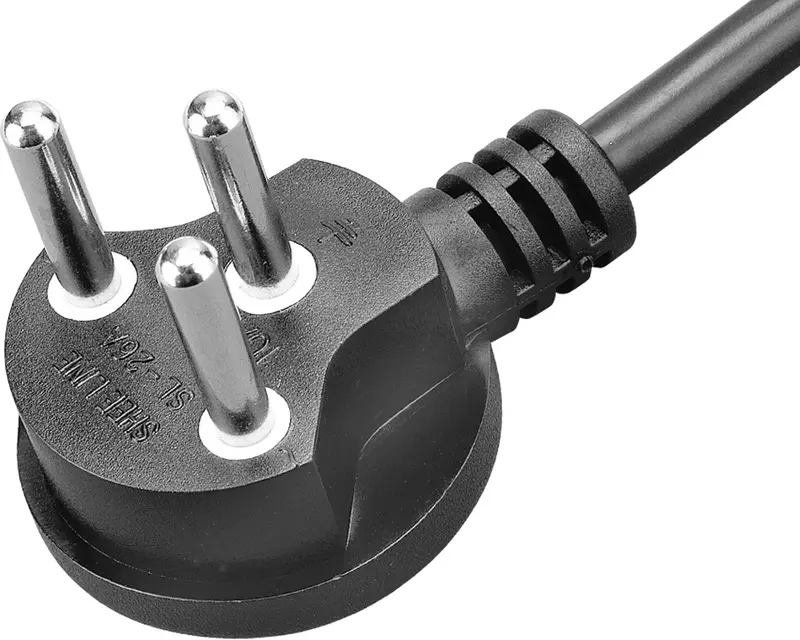
Understanding the different plug types used worldwide helps travelers prepare their devices and adapters. The International Electrotechnical Commission (IEC) classifies plugs from Type A to Type O. Each type has unique shapes and pin configurations designed for safety and compatibility in its region.
Type A: Two flat parallel pins. Common in North and Central America and Japan. Japanese Type A plugs can fit American sockets but not always the other way.
Type B: Like Type A but adds a round grounding pin. Used in the US, Canada, and Japan.
Type C: Two round pins, known as the Europlug. Widely used across Europe, Asia, and South America. Fits many European sockets but not grounded.
Type D: Three large round pins in a triangular pattern. Found in India, Sri Lanka, Nepal, and Namibia. Rated 5 amps.
Type E: Two round pins and a hole for a grounding pin. Common in France, Belgium, Slovakia, Tunisia.
Type F: Similar to Type E but grounded via side clips. Known as the Schuko plug, used in Germany, Austria, Netherlands, Spain.
Type G: Three rectangular pins in a triangular shape with a fuse. Used in the UK, Ireland, Malaysia, Singapore, and Hong Kong.
Type H: Unique to Israel, with two flat pins in a V-shape plus grounding. Being phased out for a round-pin version.
Type I: Two or three flat pins in a V-shape. Used in Australia, New Zealand, Papua New Guinea, Argentina, and China.
Type J: Three round pins, used in Switzerland and Liechtenstein. Compatible with Type C plugs.
Type K: Two round pins and a grounding pin. Common in Denmark and Greenland.
Type L: Three round pins side-by-side. Found in Italy, Chile, Uruguay, and some North African countries.
Type M: Similar to Type D but larger pins. Used in South Africa, Swaziland, Lesotho.
Type N: Two round pins and a grounding pin, used mainly in Brazil.
Type O: Exclusive to Thailand, with two round power pins and one earth pin.
North America: Types A and B dominate.
Europe: Types C, E, F, and G are most common.
Asia: Types A, C, G, I, and others vary by country.
Africa: Types C, D, E, F, G, M, and N appear depending on the region.
South America: Types A, B, C, I, L, and N are prevalent.
Australia and Oceania: Mainly Type I.
Many countries accept multiple plug types, especially where tourism is high. For example, Bangladesh and Myanmar use universal sockets accommodating Types A, B, C, D, E, F, G, I, and O. This variety helps travelers but requires careful adapter selection.
Some plugs fit multiple socket types due to design similarities:
Type C plugs fit into Type E, F, J, K, and N sockets.
Type E and F plugs are compatible via the CEE 7/7 plug.
Type I plugs are used in Australia and China, allowing some interchangeability.
Type G plugs have built-in fuses and are unique but common in former British territories.
However, many plugs are not interchangeable due to differences in pin size, shape, or grounding methods. Using the wrong plug or forcing it into a socket can cause damage or safety hazards.
Travelers should always use the correct adapter for the destination's plug type and verify voltage compatibility. Universal adapters exist that cover multiple plug types, but they may not fit all sockets securely or safely.
When traveling internationally, knowing the voltage and frequency used in your destination country is crucial. Different countries supply electricity at varying voltages and frequencies, which can affect how your devices perform or even whether they work at all.
Most of the world's countries use either 110-127 volts or 220-240 volts for their electrical outlets:
110-127V regions include the United States, Canada, parts of Central and South America (like Belize and parts of Brazil), and some Caribbean islands. These places usually run electricity at around 120 volts.
220-240V regions cover most of Europe, Asia, Africa, Australia, and many countries in South America. For example, the UK, Germany, France, China, and Australia all use voltages in this range.
Some countries have multiple voltages depending on the region. Brazil is a good example: some states use 127V, while others operate at 220V. Travelers must check the local voltage before plugging in devices to avoid damage.
Electricity frequency, measured in hertz (Hz), varies between 50Hz and 60Hz worldwide:
50Hz is common in Europe, Asia, Africa, Australia, and parts of South America.
60Hz is standard in North America, parts of South America, and a few other regions.
Frequency affects devices that rely on timing circuits, such as clocks or motors. While many modern electronics handle both frequencies, some appliances may not operate correctly if the frequency differs from their design.
Voltage and frequency differences can have several effects:
Dual voltage devices (e.g., smartphones, laptops) usually support 100-240V and 50/60Hz. They work safely worldwide with just a plug adapter.
Single voltage devices (like some hair dryers or electric shavers) may require a voltage converter if the destination voltage differs. Using them without one risks damage.
Frequency-sensitive devices may run slower or faster, or malfunction if the frequency doesn't match. For example, electric clocks or turntables might keep incorrect time or speed.
Always check your device's voltage and frequency ratings, usually printed on the power adapter or device label. If it says something like "Input: 100-240V, 50/60Hz," you're good to go with just a plug adapter. Otherwise, consider a converter or buying a local device.
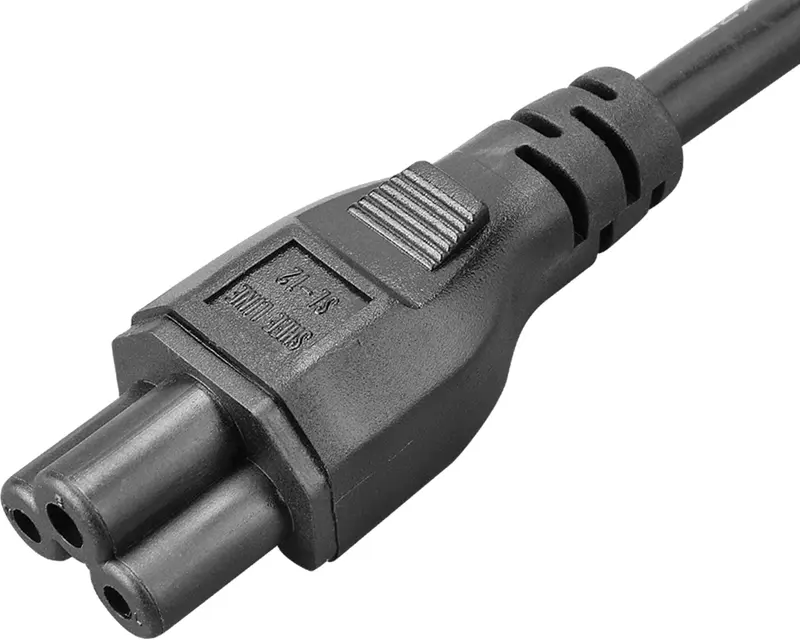
When traveling internationally, understanding the difference between an adapter and a converter is crucial for safely powering your devices.
Adapter: Changes plug shape only, allowing your device’s plug to fit into a different socket type. It does not alter voltage or frequency. Adapters are simple and light, ideal for devices that support the local voltage.
Converter: Changes voltage from one level to another, enabling devices designed for a specific voltage to work safely on a different voltage supply. Converters are bulkier and often needed for single-voltage devices.
For example, if you travel from the U.S. (120V) to Europe (230V), an adapter lets your plug fit the socket, but a converter is needed if your device does not support 230V.
Use only an adapter if your device supports dual voltage (e.g., 100-240V). Most smartphones, laptops, and chargers today are dual voltage.
Use a converter if your device is single voltage and the destination voltage differs from your device’s rating.
High-wattage appliances like hair dryers, curling irons, or electric kettles usually require a converter unless they are dual voltage.
If unsure, check the device's power label. It often reads something like “Input: 100-240V, 50/60Hz” for dual voltage devices.
Buy before you travel. Airport shops may be expensive and limited in selection.
Choose quality adapters. Look for certifications (e.g., CE, UL) to ensure safety.
Consider universal adapters. They cover multiple plug types (A to O) and often include USB ports for charging several devices.
Check wattage limits. Some adapters have limits; avoid overloading.
Use surge protectors. A travel power strip with surge protection can safeguard devices in countries with unstable power.
Be cautious with converters. They can be heavy and may generate heat; use only for necessary devices.
Label your adapters. It helps keep track if traveling to multiple countries.
Test devices before leaving. Ensure your adapter or converter works properly with your device.
By planning ahead and choosing the right adapter or converter, you can keep your electronics safe, functional, and ready to use anywhere.
Traveling to countries with multiple plug types or varying voltages can be tricky. Many nations, especially in Asia, Africa, and Latin America, use several plug types and sometimes different voltages within their borders. This diversity stems from historical, economic, and infrastructural factors, making preparation essential.
Some countries officially recognize more than one plug type. For example:
Bangladesh accepts Types A, C, D, M, and G due to universal sockets.
Myanmar uses Types A, B, C, D, E, F, G, I, and O, thanks to universal outlets.
Brazil has two voltage zones: 127V in some states and 220V in others, using Types C and N plugs.
Nepal offers sockets compatible with many plug types, including A, B, C, D, E, F, G, I, J, K, L, and O.
Cambodia and Ghana often feature universal sockets accepting multiple plug types.
This variety helps tourists but requires careful adapter selection and voltage checking.
Research thoroughly: Check official sources or trusted travel guides to identify plug types and voltage zones.
Pack universal adapters: Choose adapters covering all plug types used in your destination.
Consider voltage converters: If your devices are single voltage, bring a converter suitable for the local voltage.
Ask your accommodation: Many hotels provide adapters or appliances compatible with local power.
Label your adapters: Keep track of which adapter fits which country or region.
Avoid forcing plugs: Never force a plug into a socket; it risks damage or electric shock.
Use quality adapters and converters: Cheap or uncertified accessories can cause fires or damage devices.
Check device voltage ratings: Ensure devices support local voltage or use a converter.
Unplug devices when not in use: Helps prevent overheating or electrical faults.
Be cautious with universal sockets: While convenient, some may not provide proper grounding or secure connections.
Use surge protectors: Protect devices from voltage spikes common in some regions.
Avoid using high-power devices on incompatible voltages: Hair dryers or irons can easily be damaged or cause hazards.
By understanding the complexities of multi-plug and multi-voltage countries and preparing accordingly, travelers can keep their electronics safe and functional throughout their trip.
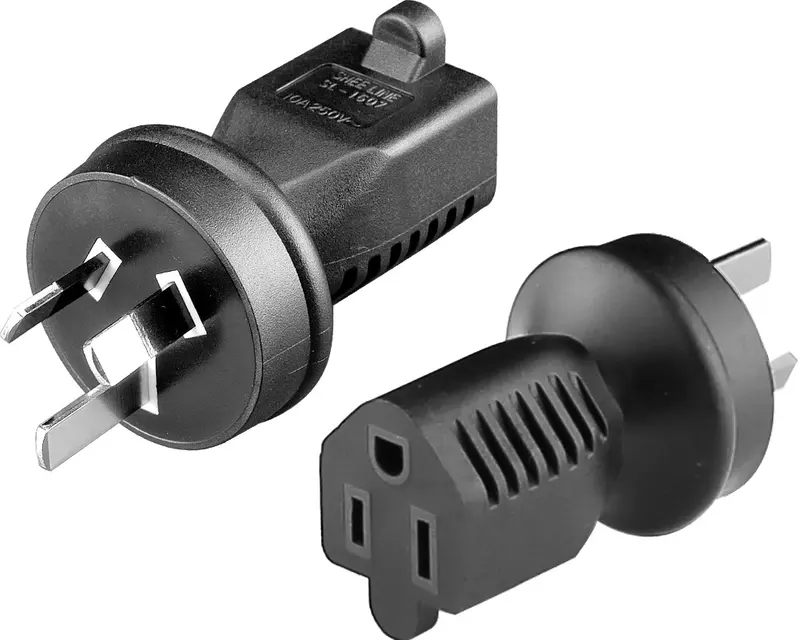
Travelers often wonder if universal sockets or plugs exist that work worldwide. While the idea sounds convenient, the reality is more complex due to safety and compatibility issues.
Universal sockets are designed to accept multiple plug types. You'll find them mostly in international hotels, airports, and some public places catering to travelers. These sockets can fit plugs from various regions, such as Types A, C, G, I, and others.
However, truly universal plugs that fit all socket types worldwide do not exist. The diversity in pin shapes, sizes, and grounding methods prevents a single plug from fitting safely everywhere. Some universal adapters come close by offering multiple plug configurations in one device.
Benefits:
Convenience: One adapter covers many plug types, reducing the need to carry several adapters.
Space-saving: Ideal for travelers visiting multiple countries.
Versatility: Often include USB ports for charging phones, tablets, and other electronics.
Risks:
Safety concerns: Universal adapters may lack proper grounding or secure fit, increasing risk of shocks or short circuits.
Compatibility issues: Some universal adapters may not fit snugly, causing loose connections that can damage devices.
Limited power capacity: They might not support high-wattage appliances like hair dryers or irons.
Quality varies: Cheap universal adapters may fail safety standards or break easily.
Because of these risks, universal adapters should be used cautiously. Always choose high-quality, certified products and check if your devices support the local voltage and frequency.
Understanding international power plugs and voltages is crucial for safe travel. Different regions use varied plug types and voltage ranges, impacting device compatibility. Travelers should verify plug types and voltage specifications before using devices abroad to avoid damage. Sheeline offers high-quality universal adapters, ensuring seamless device use across global power systems. Their products provide convenience and safety, making them ideal for international travelers navigating diverse electrical standards.
Q: What is an international plug?
A: An international plug is an adapter that allows electrical devices to connect to different socket types worldwide, ensuring compatibility and safe usage in various countries.
Q: How do I use an international plug adapter?
A: To use an international plug adapter, simply connect your device's plug to the adapter, then insert the adapter into the local socket. Ensure the adapter matches the plug type and voltage requirements of your destination.
Q: Why do countries have different plug types?
A: Countries have different plug types due to historical development, safety standards, and regional electrical infrastructure. These variations help prevent incompatible devices from causing electrical hazards.
Blog


